SpaceX’s latest Starship flight concludes with intact ocean landing
Starship Flight ¹³ successfully completed a controlled splashdown, allowing engineers to examine its heat shield and assess reusability for upcoming missions.
Written automatically from the sources below and not individually reviewed by a human editor.
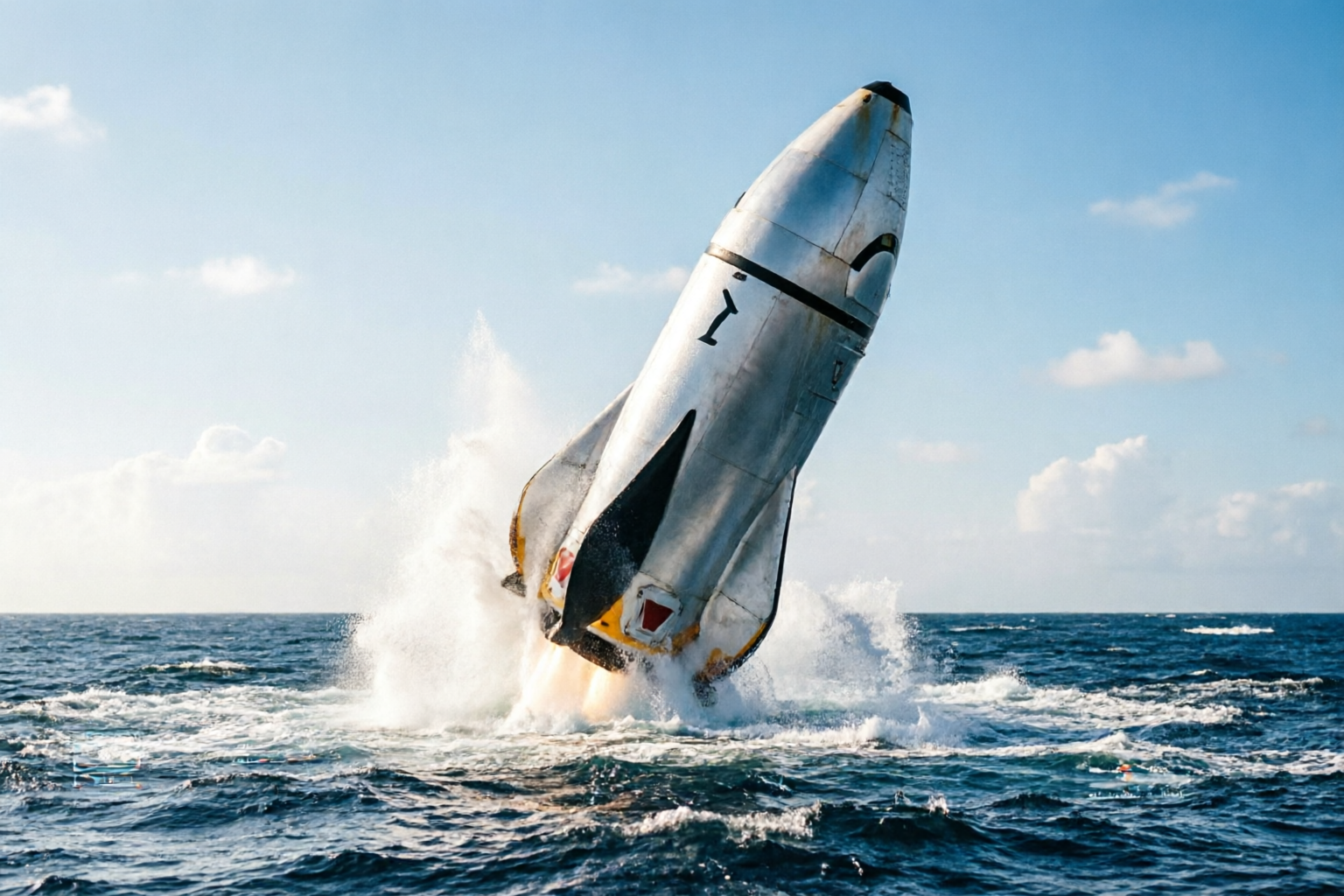
SpaceX’s most recent Starship test flight marked a milestone with its first intact ocean landing, providing engineers an opportunity to inspect the spacecraft’s heat shield after enduring extreme reentry conditions. The successful splashdown in the Indian Ocean enabled close-up analysis of the protective layer, which plays a key role in supporting rapid mission turnarounds. While the booster did not achieve full recovery, the flight demonstrated progress toward reusable rocket technology. The data collected will inform future orbital missions, where frequent launches could become standard. This achievement follows a series of incremental advancements in Starship’s development, reinforcing the program’s focus on reliability and operational efficiency. The insights gained from this flight bring SpaceX closer to its goal of sustainable, high-cadence spaceflight operations. Engineers will now review the heat shield’s performance alongside other systems to refine future iterations of the vehicle. The flight also included a restart of the Raptor engines, a capability critical for controlled descents in upcoming tests. With each successful landing, Starship moves nearer to fulfilling its potential as a fully reusable launch system, paving the way for ambitious missions ahead.
Sources
1 sourceThe article is grounded in the independently assessed evidence listed here.
Generated from retrieved source material, checked for evidence and provenance, and released through runtime safety controls.
Read our editorial standard →Spot a problem?
Reports go to the operator review queue and do not alter the article automatically.