Researchers create adaptable silicon-photonics chips for advanced applications
A new fabrication method produces flexible and transparent silicon-photonics chips, expanding potential uses in medical and aerospace fields.
Written automatically from the sources below and not individually reviewed by a human editor.
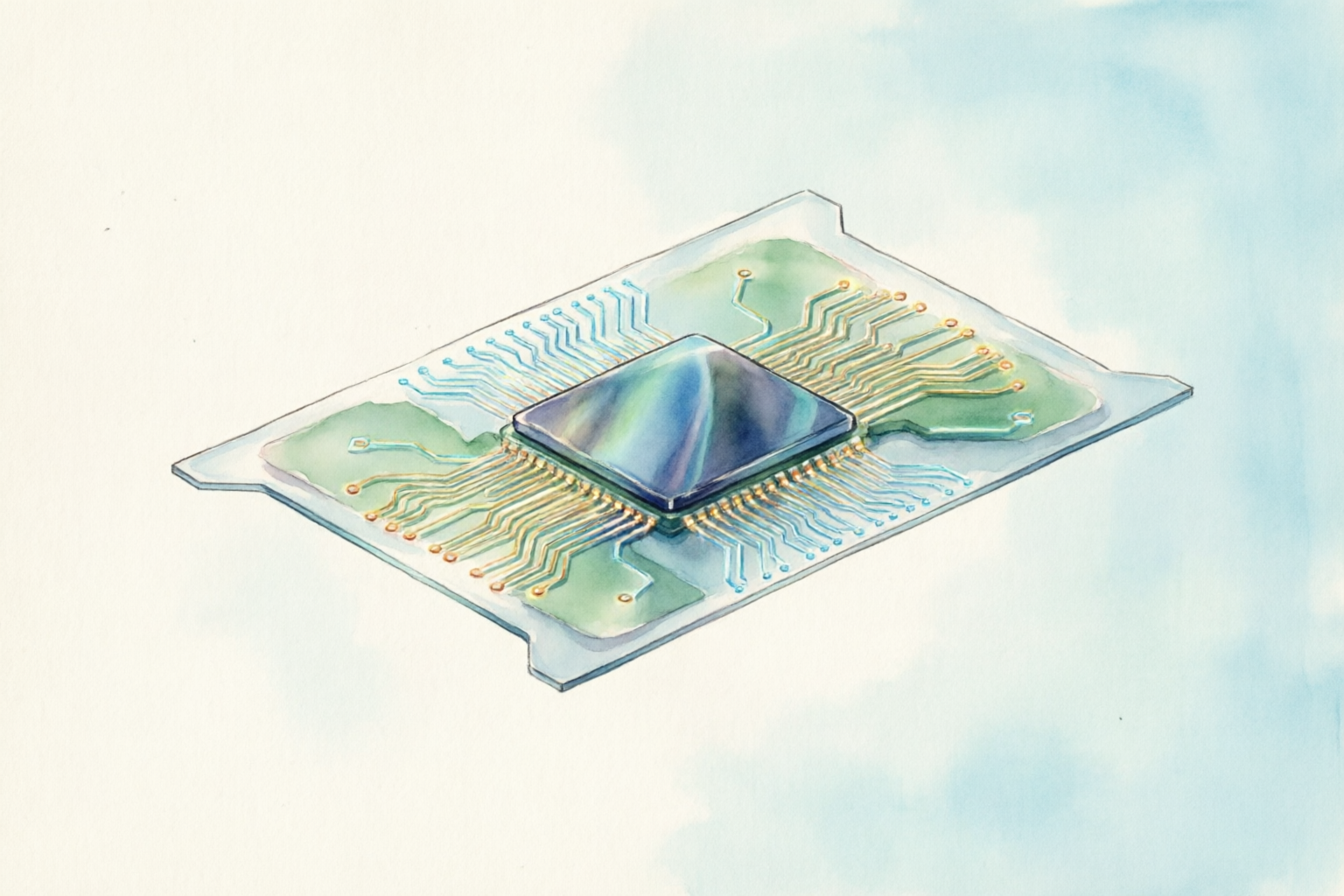
Researchers at MIT have introduced a fabrication technique capable of producing silicon-photonics chips that are both flexible and optically transparent. This development addresses long-standing limitations in the field, where such chips have traditionally been rigid and opaque. The new process employs low-temperature methods and precise chemical etching to preserve the integrity of ultrathin layers, ensuring durability while maintaining transparency. Testing confirmed the chips could bend without introducing significant haze or distortion, even when subjected to rigorous optical assessments, including experiments simulating a bionic eye interface. These advancements open doors for applications in healthcare, such as wearable monitors designed to conform seamlessly to the body, and in aerospace, where transparent augmented reality displays could enhance pilot visibility. The research was supported by multiple funding bodies, including the National Science Foundation and DARPA, and involved collaboration between MIT’s Research Laboratory of Electronics and NY Creates at the Albany NanoTech Complex. The findings were published in the journal *Optica*, marking a significant step toward scalable production of these next-generation components.
Sources
1 sourceThe article is grounded in the independently assessed evidence listed here.
Generated from retrieved source material, checked for evidence and provenance, and released through runtime safety controls.
Read our editorial standard →Spot a problem?
Reports go to the operator review queue and do not alter the article automatically.