Scientists replicate early universe conditions with novel nuclear approach
Researchers have used smaller atomic nuclei to generate quark-gluon plasma, offering new insights into the fundamental forces shaping the cosmos and the behavior of matter at extreme densities.
Written automatically from the sources below and not individually reviewed by a human editor.
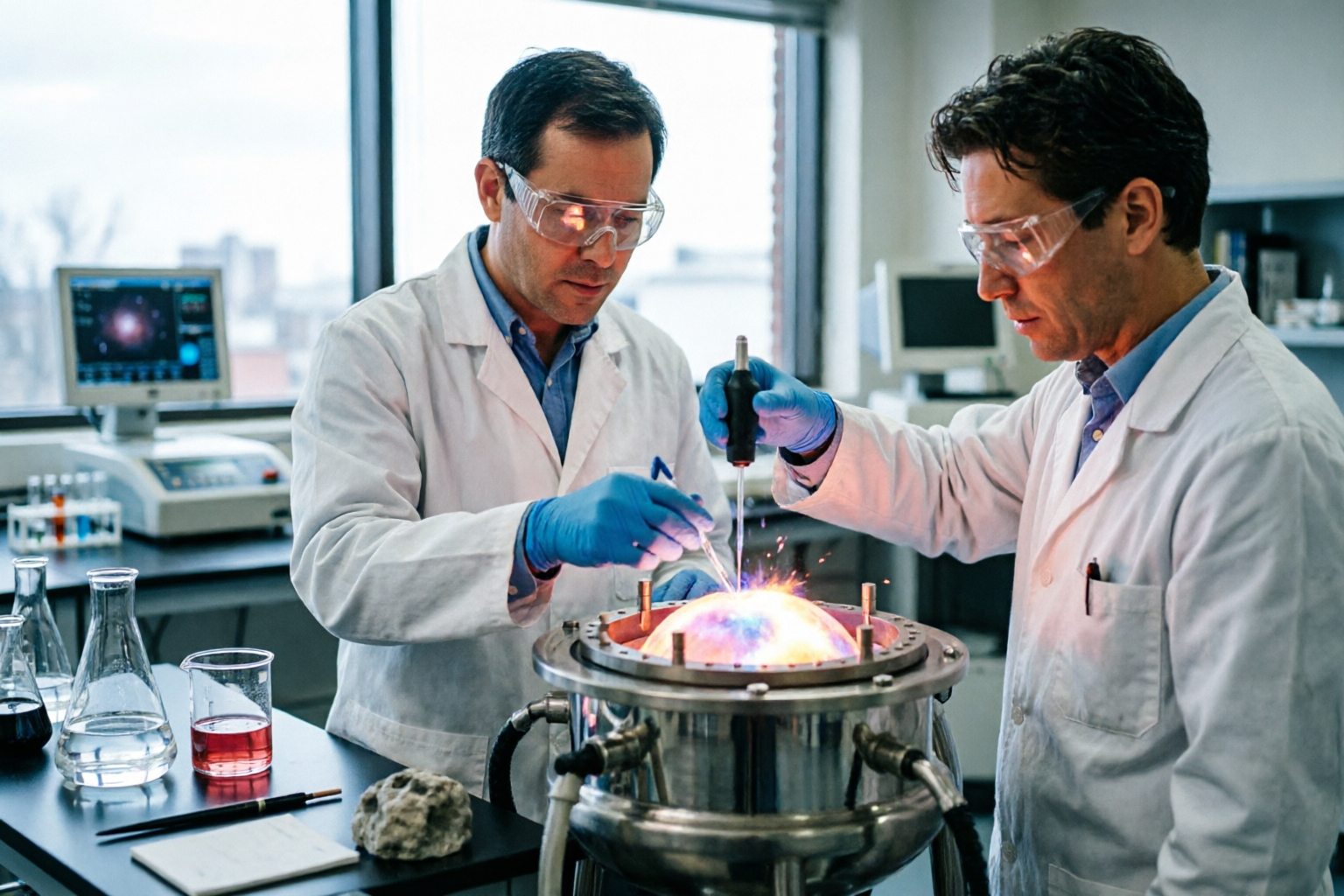
Scientists collaborating between the Niels Bohr Institute and CERN’s ALICE experiment have achieved a breakthrough in recreating the conditions of the early universe. By employing lighter atomic nuclei—specifically oxygen and neon—they produced quark-gluon plasma, a state of matter believed to have existed microseconds after the Big Bang. This method diverges from previous studies, which relied on heavier nuclei like lead, and provides a fresh perspective on how nuclear particles interact under extreme temperatures and pressures. The findings, published in a leading physics journal, suggest that smaller nuclei can unlock comparable insights into the fundamental structure of matter and the forces governing cosmic evolution. Researchers emphasize that this advancement could refine models of nuclear behavior and deepen understanding of the universe’s infancy, where quarks and gluons roamed freely before forming protons and neutrons. The discovery marks a shift in experimental approaches, potentially opening new avenues for studying the building blocks of visible matter. While earlier experiments focused on larger collisions, this technique demonstrates that lighter nuclei can achieve similar plasma conditions, broadening the scope of investigation into the universe’s earliest moments.
Sources
1 sourceThe article is grounded in the independently assessed evidence listed here.
Generated from retrieved source material, checked for evidence and provenance, and released through runtime safety controls.
Read our editorial standard →Spot a problem?
Reports go to the operator review queue and do not alter the article automatically.