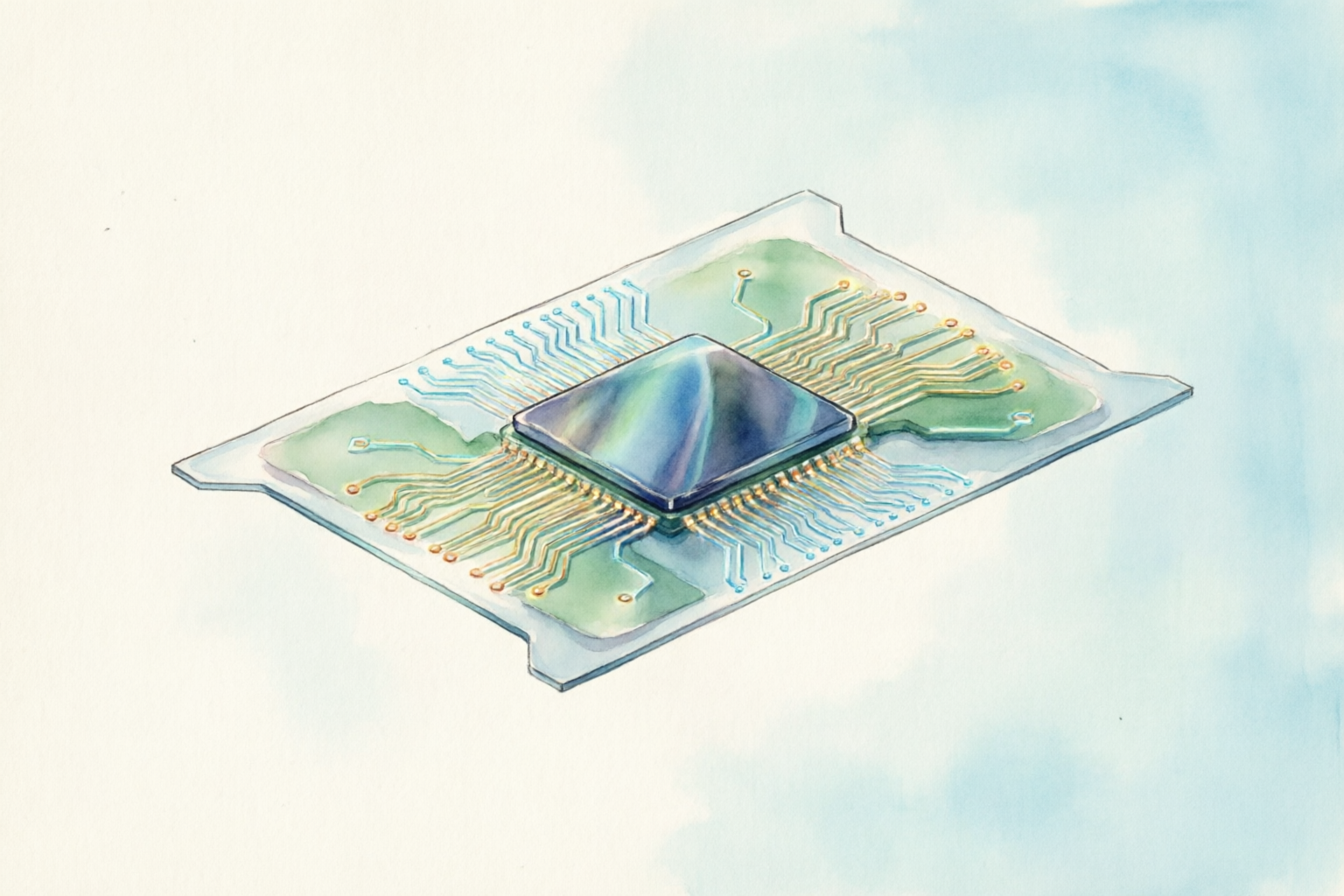
Researchers create microwave-based neural chip for secure satellite and drone networks
Engineers at Cornell have designed a chip that encodes data into microwave signals, potentially improving communication efficiency and security for remote systems.
Written automatically from the sources below and not individually reviewed by a human editor.

A team of researchers at Cornell’s Duffield College of Engineering has introduced a novel approach to data transmission by developing a microwave neural network chip. Unlike traditional methods, this system converts information—such as navigation instructions or control signals—into unique microwave pulse patterns, akin to how large language models process text. The innovation could streamline communication for satellites, drones, and edge computing devices by reducing the need for high-bandwidth or energy-intensive transmissions. Early demonstrations suggest the chip may enhance both speed and security in environments where conventional wireless links face limitations. While still in development, the technology represents a shift toward more adaptive and efficient signal processing in critical applications. The work was led by Alyssa Apsel and her team in the university’s Ithaca laboratory, with findings published in *Nature Communications*. The approach draws parallels to token-based encoding in artificial intelligence but applies it to microwave signals, offering a potential bridge between digital and wireless communication paradigms.
Sources
1 sourceThe article is grounded in the independently assessed evidence listed here.
Generated from retrieved source material, checked for evidence and provenance, and released through runtime safety controls.
Read our editorial standard →Spot a problem?
Reports go to the operator review queue and do not alter the article automatically.