Neurons in fruit flies orchestrate feeding movements through brain signals
Researchers at Peking University reveal how motor neurons in fruit flies coordinate rhythmic muscle contractions during feeding by sending feedback to the brain, offering insights into motor control mechanisms.
Written automatically from the sources below and not individually reviewed by a human editor.
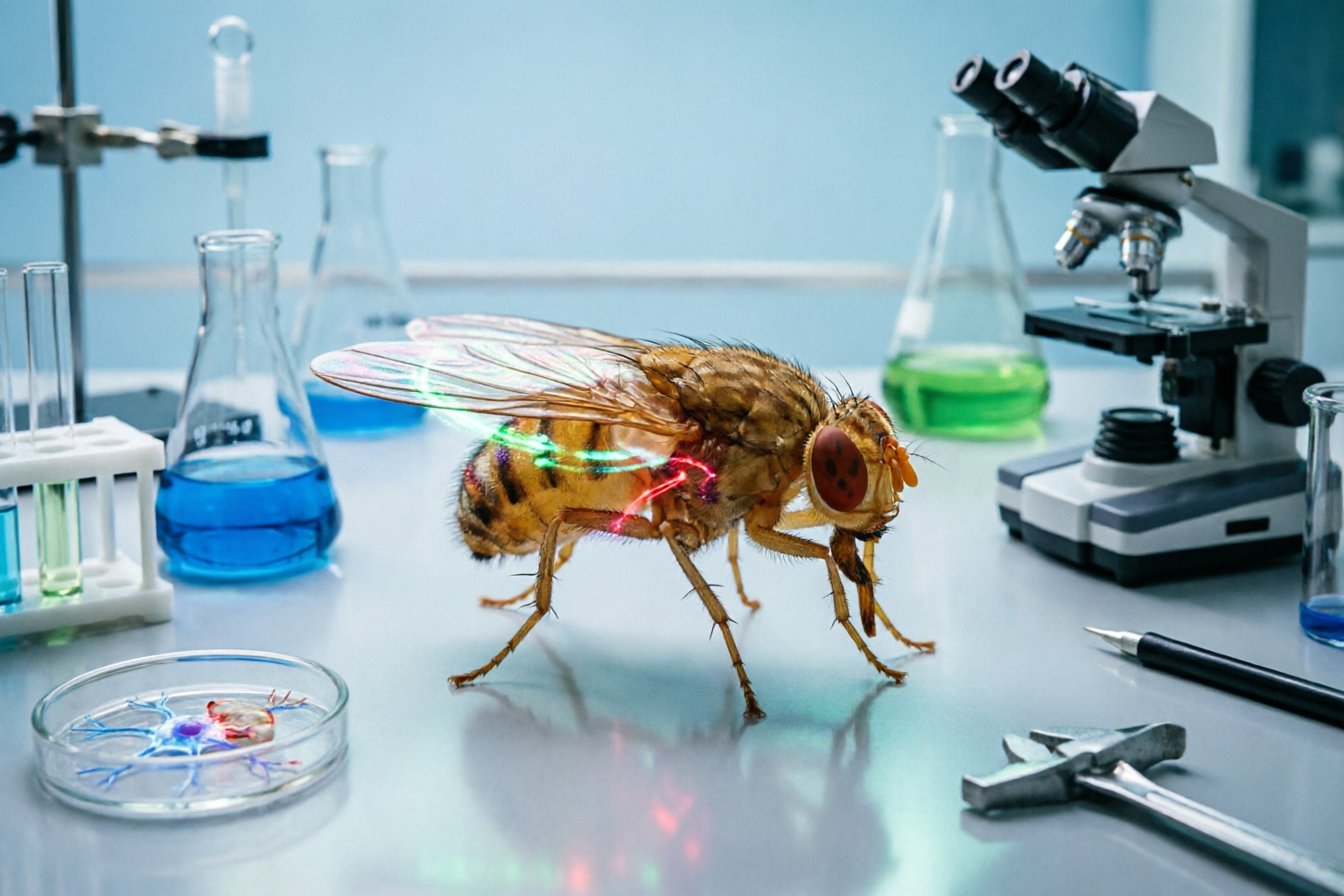
Scientists have uncovered how motor neurons in fruit flies regulate feeding movements by communicating with the brain. During feeding, these neurons activate specific mouth muscles in a precise order, creating rhythmic contractions. Each neuron not only triggers muscle activity but also relays signals back to the brain, effectively releasing a form of restraint on the next neuron in the sequence. This feedback loop ensures smooth, coordinated motion, resembling a controlled cascade. The findings merge two previously distinct areas of study: how neurons follow commands and how they influence subsequent actions. This discovery could inform research on motor control and even inspire advancements in robotics by mimicking biological precision. The study highlights the intricate interplay between neurons and muscles, suggesting that similar mechanisms may govern movement in other organisms, including humans. By observing fruit flies, researchers have gained a clearer picture of how the brain and body collaborate to produce deliberate, rhythmic actions. This work underscores the complexity of neural feedback and its role in shaping movement patterns.
Sources
1 sourceThe article is grounded in the independently assessed evidence listed here.
Generated from retrieved source material, checked for evidence and provenance, and released through runtime safety controls.
Read our editorial standard →Spot a problem?
Reports go to the operator review queue and do not alter the article automatically.