NASA’s Curiosity Rover Examines Distinctive Geological Feature on Mars
The Curiosity rover has reached and analyzed an unusual erosional layer on Mount Sharp, offering new insights into the planet’s sedimentary past.
Written automatically from the sources below and not individually reviewed by a human editor.
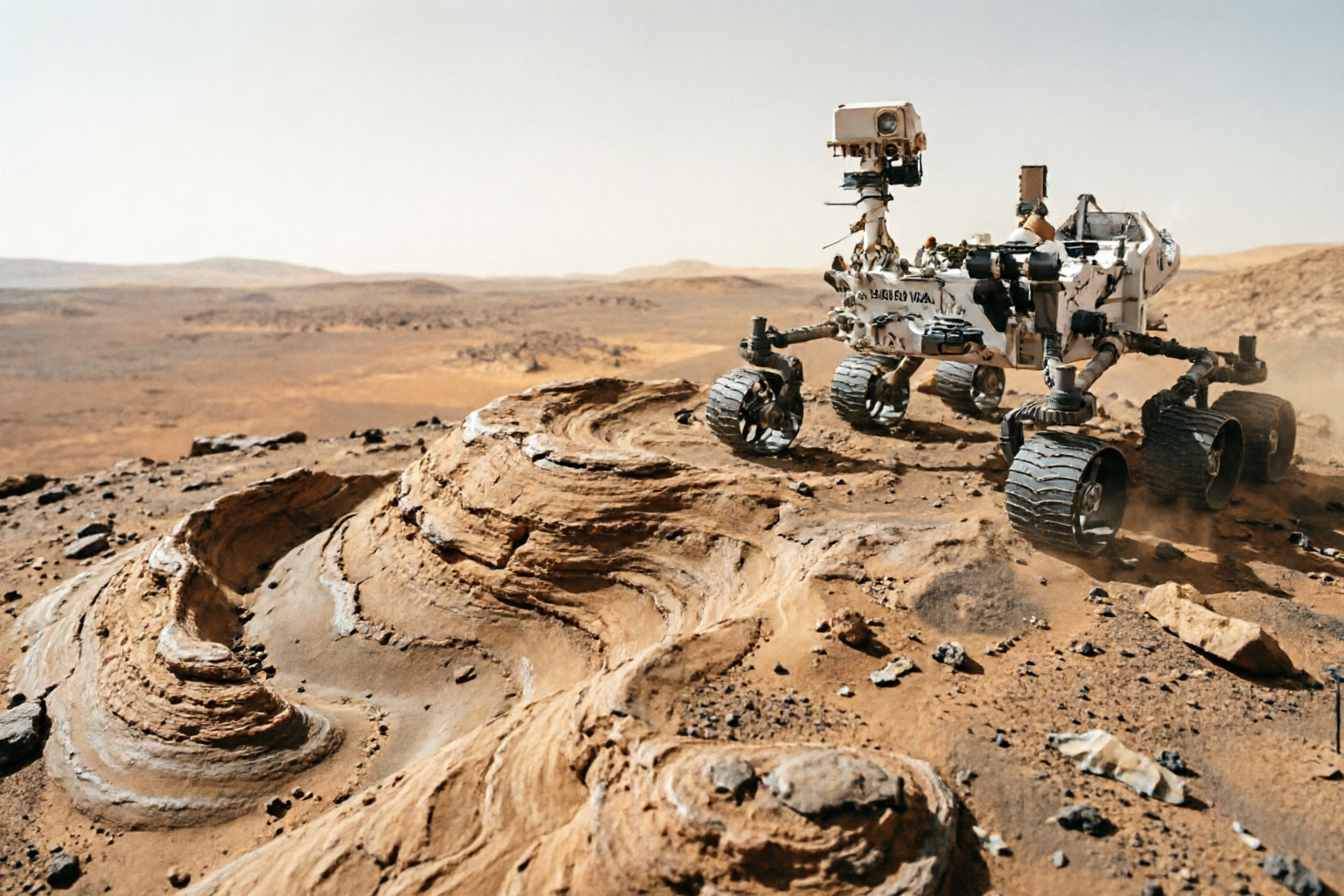
NASA’s Curiosity rover has begun investigating a notable geological formation on Mount Sharp, where an erosional supersurface marks a significant shift in the rock record. This feature represents a transition in the sedimentary layers, potentially revealing clues about past environmental conditions on Mars. The rover team executed detailed imaging from multiple angles, capturing high-resolution mosaics and compositional data to study the area’s structure and composition. Using instruments like the Mars Hand Lens Imager (MAHLI) and the Alpha Particle X-ray Spectrometer (APXS), scientists analyzed specific rock targets to better understand their mineral makeup. The rover’s careful approach balances scientific curiosity with the challenges of navigating uneven terrain. While plans to traverse the supersurface are underway, this investigation could deepen knowledge of Mars’ geological history and the processes that shaped its surface over time. The findings may help refine theories about ancient water activity and climate variations on the planet, contributing to broader studies of planetary evolution.
Sources
1 sourceThe article is grounded in the independently assessed evidence listed here.
Generated from retrieved source material, checked for evidence and provenance, and released through runtime safety controls.
Read our editorial standard →Spot a problem?
Reports go to the operator review queue and do not alter the article automatically.