Hollywood’s portrayal of volcanoes diverges sharply from scientific reality
A new study examines how films distort volcanic behavior, human responses, and scientific processes, raising concerns about public understanding of natural hazards.
Written automatically from the sources below and not individually reviewed by a human editor.
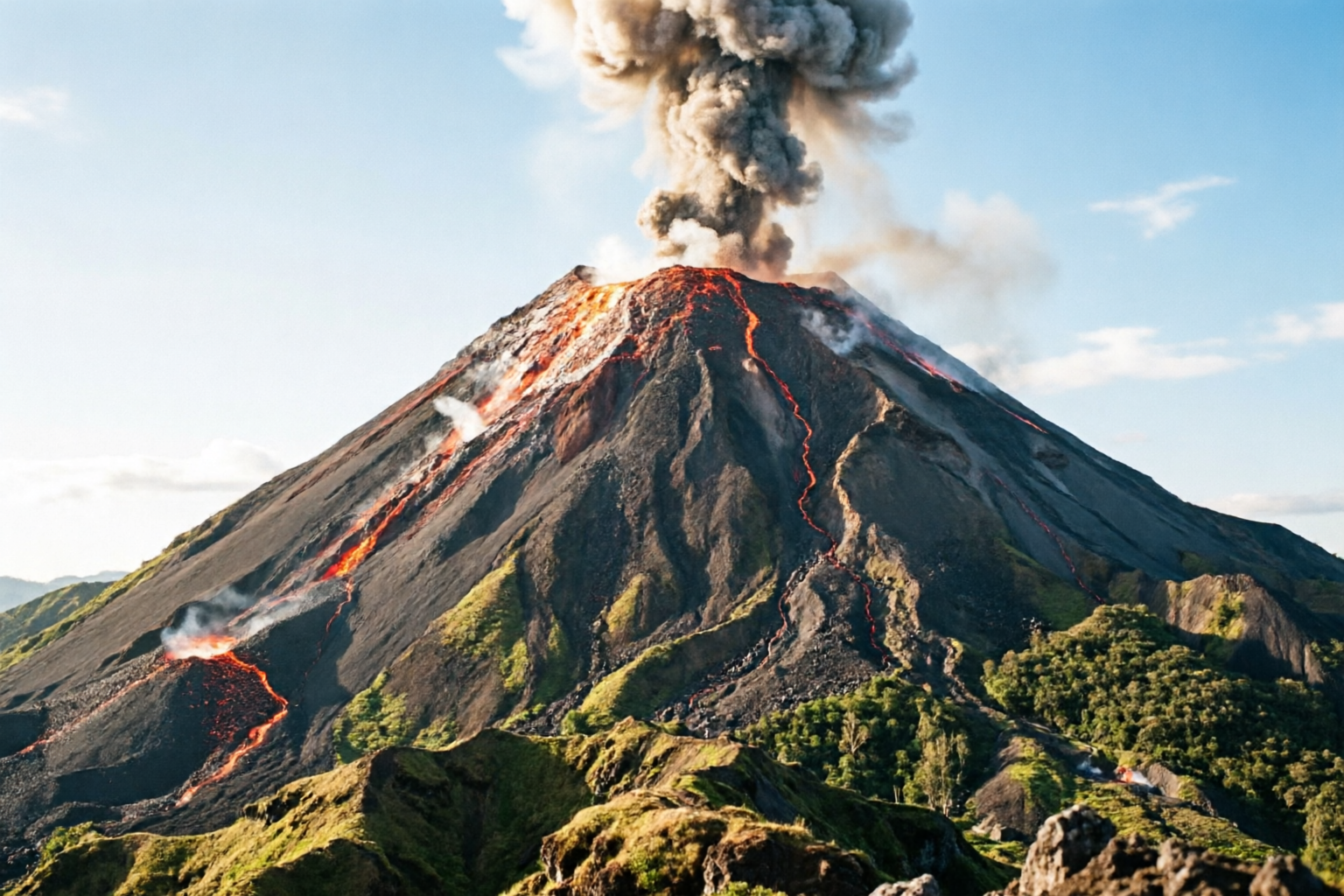
A research team led by the University of Bristol has published findings indicating that Hollywood films frequently misrepresent volcanic eruptions in ways that may shape public perception. The study, published in *Bulletin of Volcanology*, highlights how movies often exaggerate the speed and scale of lava flows while compressing eruption timelines into dramatic, condensed sequences. In reality, volcanic events unfold over extended periods, with hazards like pyroclastic flows posing greater risks than fast-moving lava—a distinction rarely reflected in film depictions. The research also notes that movies tend to overlook the prolonged uncertainty and decision-making processes that characterize real-world volcanic crises, instead focusing on immediate, visually striking moments. Collaborating with institutions in Oxford, Manchester, and Niigata University, the team emphasizes the need for more accurate portrayals to improve public awareness of volcanic behavior and its human impacts. The findings suggest that entertainment media may inadvertently influence how audiences perceive natural disasters, underscoring the importance of scientific communication in countering misconceptions.
Sources
1 sourceThe article is grounded in the independently assessed evidence listed here.
Generated from retrieved source material, checked for evidence and provenance, and released through runtime safety controls.
Read our editorial standard →Spot a problem?
Reports go to the operator review queue and do not alter the article automatically.