Brain circuits reveal adaptable memory systems in prefrontal cortex
Researchers at MIT demonstrate how neural networks in the prefrontal cortex dynamically shift between processing sensory details and organizing action plans, challenging traditional views of fixed memory storage.
Written automatically from the sources below and not individually reviewed by a human editor.
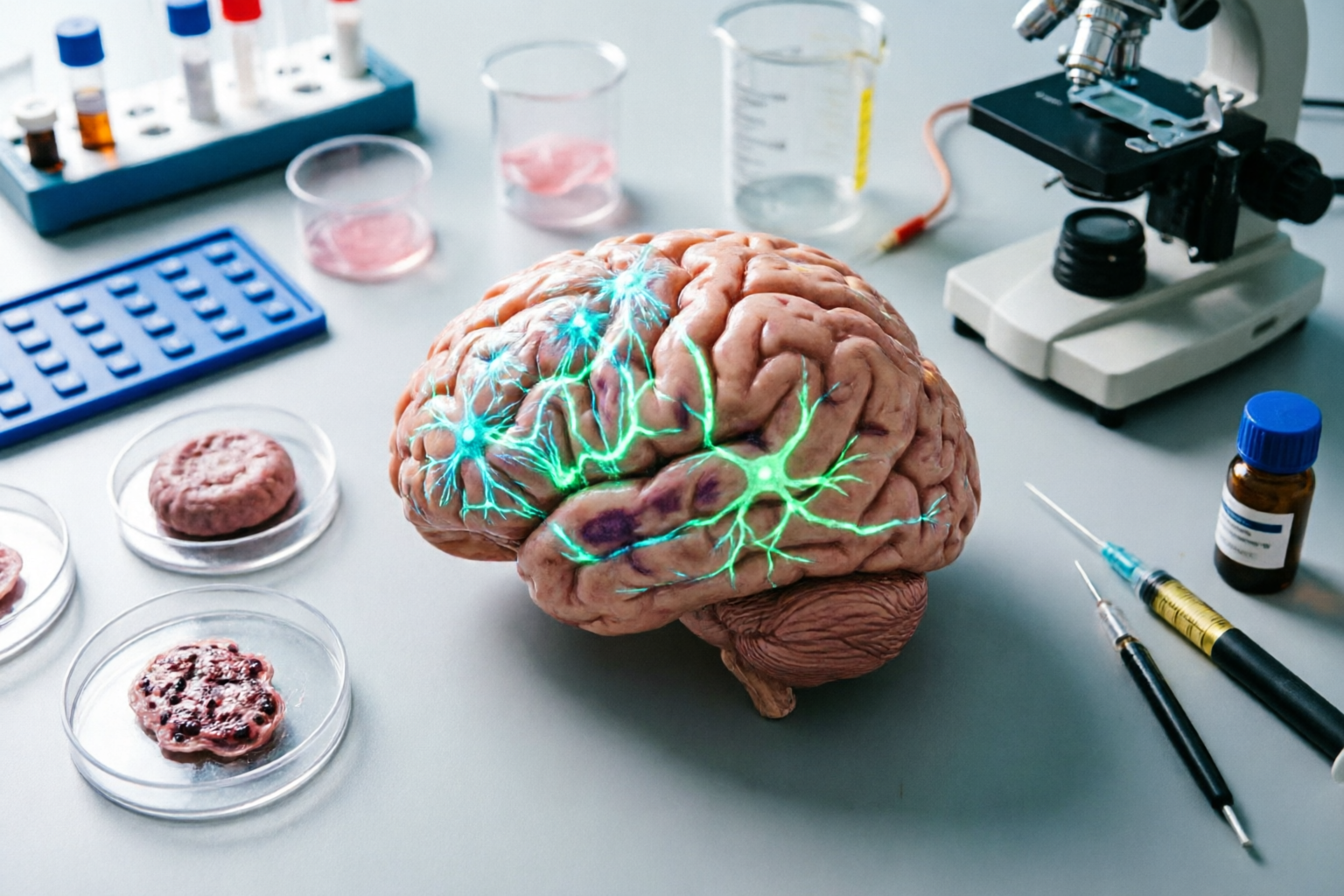
A team of neuroscientists at MIT has uncovered evidence that the prefrontal cortex contains neural circuits capable of switching functions between sensory memory and action planning. Unlike previously understood systems, these circuits do not remain dedicated to a single task but instead adapt their role depending on cognitive demands. The findings emerged from experiments involving mice trained to distinguish auditory signals and respond accordingly, with researchers monitoring neural activity across both prefrontal and parietal regions. While neurons in the parietal cortex consistently encoded sensory information, those in the prefrontal cortex exhibited remarkable flexibility, toggling between storing sensory input and preparing action sequences. This adaptability aligns with the broader concept of compositional cognition, suggesting the brain assembles cognitive processes from reusable neural modules much like building blocks. The discovery could reshape understanding of how memory and decision-making interact in the brain, offering potential insights into disorders where cognitive flexibility is impaired. The study was supported by multiple funding bodies, including the National Institutes of Health and the Picower Institute for Learning and Memory.
Sources
1 sourceThe article is grounded in the independently assessed evidence listed here.
Generated from retrieved source material, checked for evidence and provenance, and released through runtime safety controls.
Read our editorial standard →Spot a problem?
Reports go to the operator review queue and do not alter the article automatically.