Ancient poop reveals clues about birds’ survival through extinction
A preserved dinosaur coprolite containing fossilized feathers offers insights into how certain bird ancestors endured the mass extinction event.
Written automatically from the sources below and not individually reviewed by a human editor.
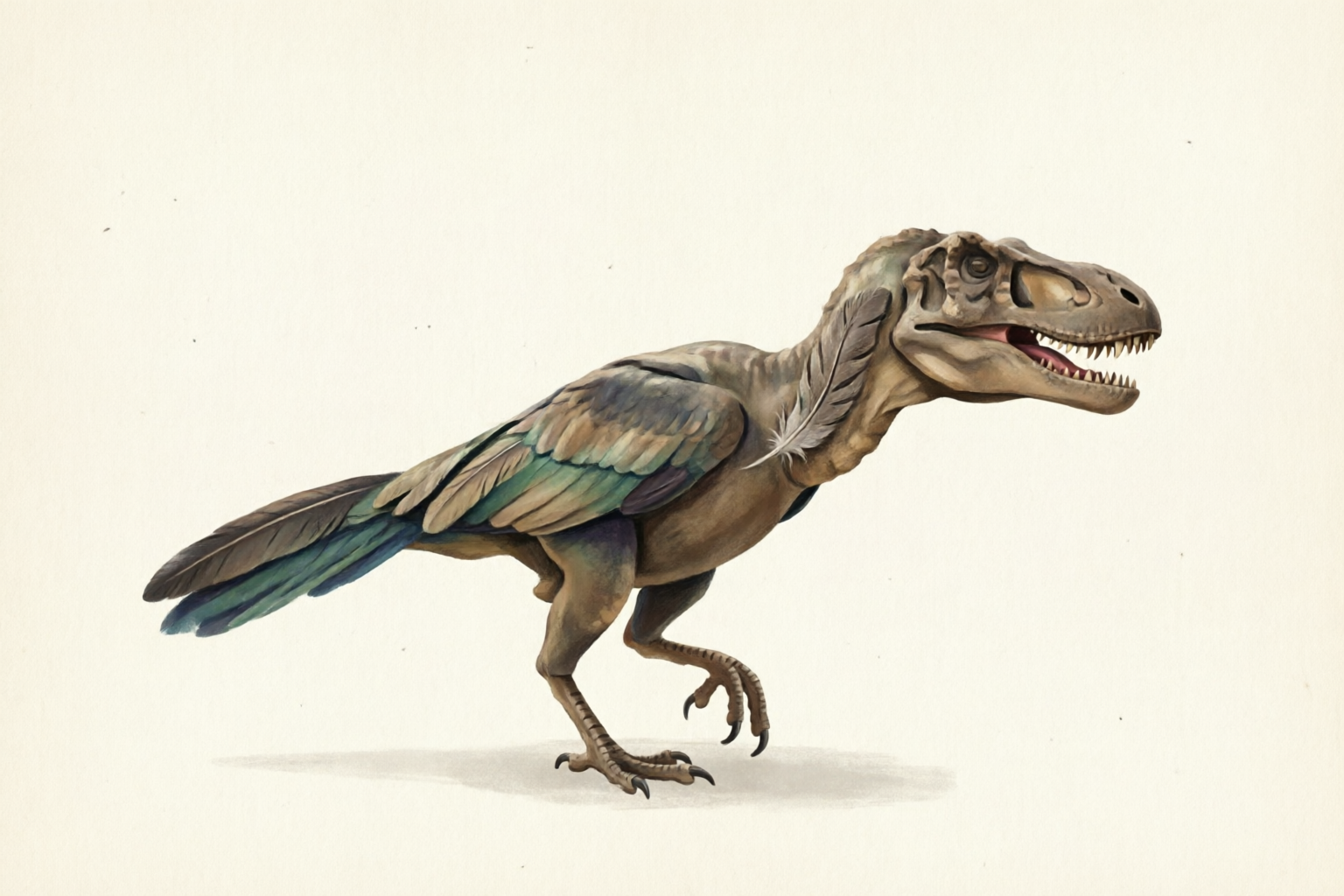
Researchers examining a fossilized deposit from the late Cretaceous period have uncovered evidence that may explain why some bird lineages persisted through the catastrophic extinction. The discovery centers on a coprolite—fossilized dinosaur droppings—found in Montana’s Hell Creek Formation, which contained not only feathers but also remnants of fish scales and leg bones from an extinct bird group. The feathers themselves display structural traits resembling those of modern birds, including a hollow, sponge-like core within a rigid shaft, a feature previously unidentified in Mesozoic-era specimens. These characteristics suggest that feather composition may have played a role in determining which birds thrived after the extinction event. The findings highlight how physical adaptations could have influenced survival, offering a rare glimpse into the evolutionary pressures faced by early avian ancestors. The specimen is now part of a public exhibit, allowing scientists and visitors to study these ancient clues firsthand. This research shifts understanding away from broad environmental factors alone, emphasizing the importance of anatomical traits in species resilience during upheaval.
Sources
1 sourceThe article is grounded in the independently assessed evidence listed here.
Generated from retrieved source material, checked for evidence and provenance, and released through runtime safety controls.
Read our editorial standard →Spot a problem?
Reports go to the operator review queue and do not alter the article automatically.