New research initiative blends traditional and modern farming to restore New England landscapes
A collaborative project led by Yale and regional partners introduces agroforestry techniques to enhance soil quality and ecological balance across New England’s working lands.
Written automatically from the sources below and not individually reviewed by a human editor.
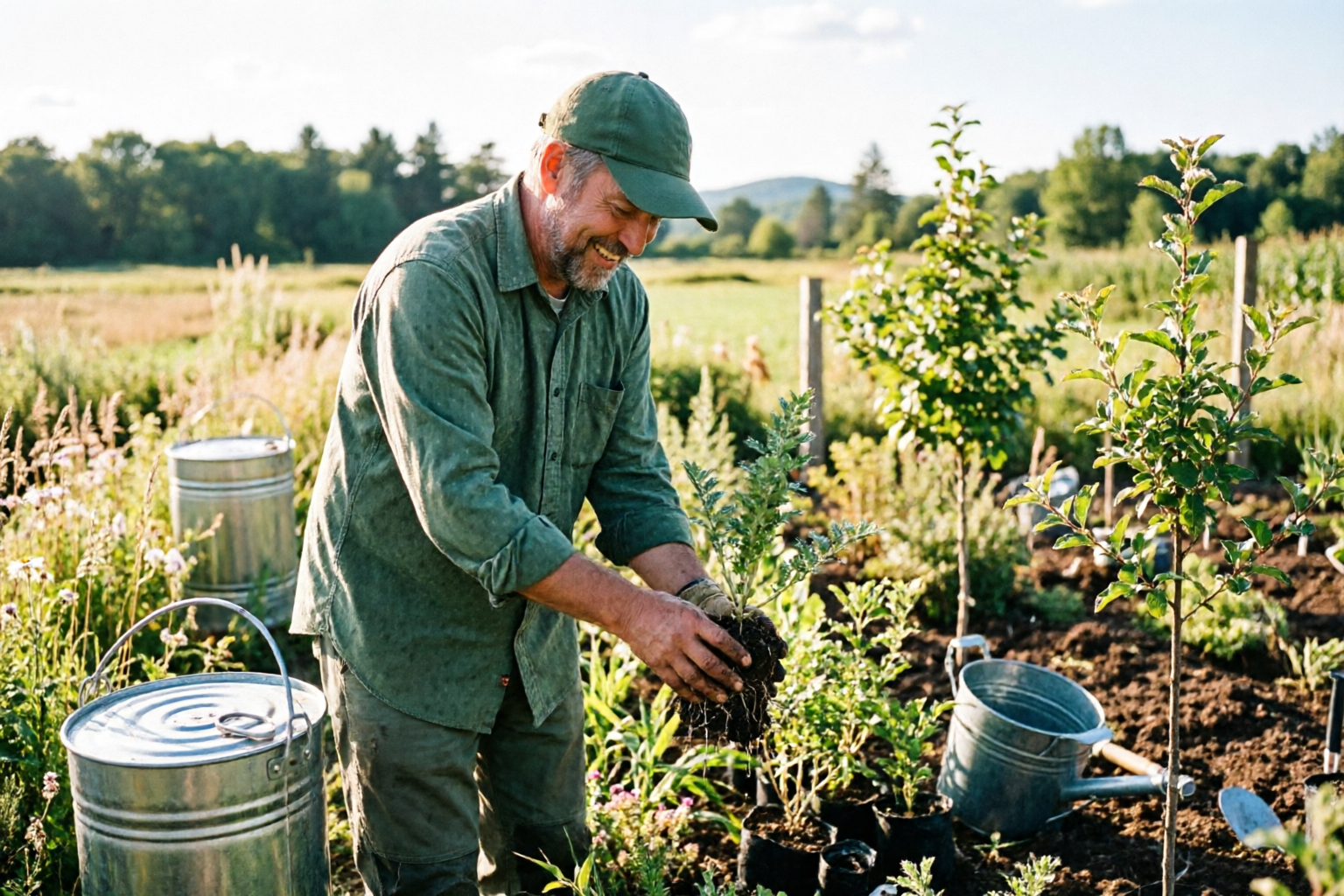
A partnership between Yale School of the Environment, Dartmouth College, the University of New Hampshire, and the U.S. Forest Service has launched a program to explore how integrating trees with agricultural production can strengthen farmland ecosystems. The initiative, known as ADAPT, focuses on three agroforestry approaches—silvopasture, forest farming, and food forests—to test their potential in New England’s mixed landscapes. By combining Indigenous knowledge with contemporary scientific methods, researchers aim to improve soil health and support farmers adapting to environmental challenges. The project also includes a training program involving farms and university forest sites to share best practices and expand regional capacity. This effort reflects a growing recognition of agroforestry’s role in sustainable land management, offering a model for balancing productivity with ecological resilience in rural communities. The work builds on decades of smaller-scale experiments but marks a coordinated regional push to scale these methods across diverse farm settings. Participants emphasize that successful outcomes will depend on both technical innovation and community engagement, ensuring that solutions remain practical for the farmers who implement them.
Sources
1 sourceThe article is grounded in the independently assessed evidence listed here.
Generated from retrieved source material, checked for evidence and provenance, and released through runtime safety controls.
Read our editorial standard →Spot a problem?
Reports go to the operator review queue and do not alter the article automatically.