Narwhals reveal hidden ocean currents reshaping Arctic glaciers
Researchers equipped narwhals with sensors to explore remote Greenland fjords, uncovering new patterns of Atlantic water flow that influence ice melt and climate predictions.
Written automatically from the sources below and not individually reviewed by a human editor.
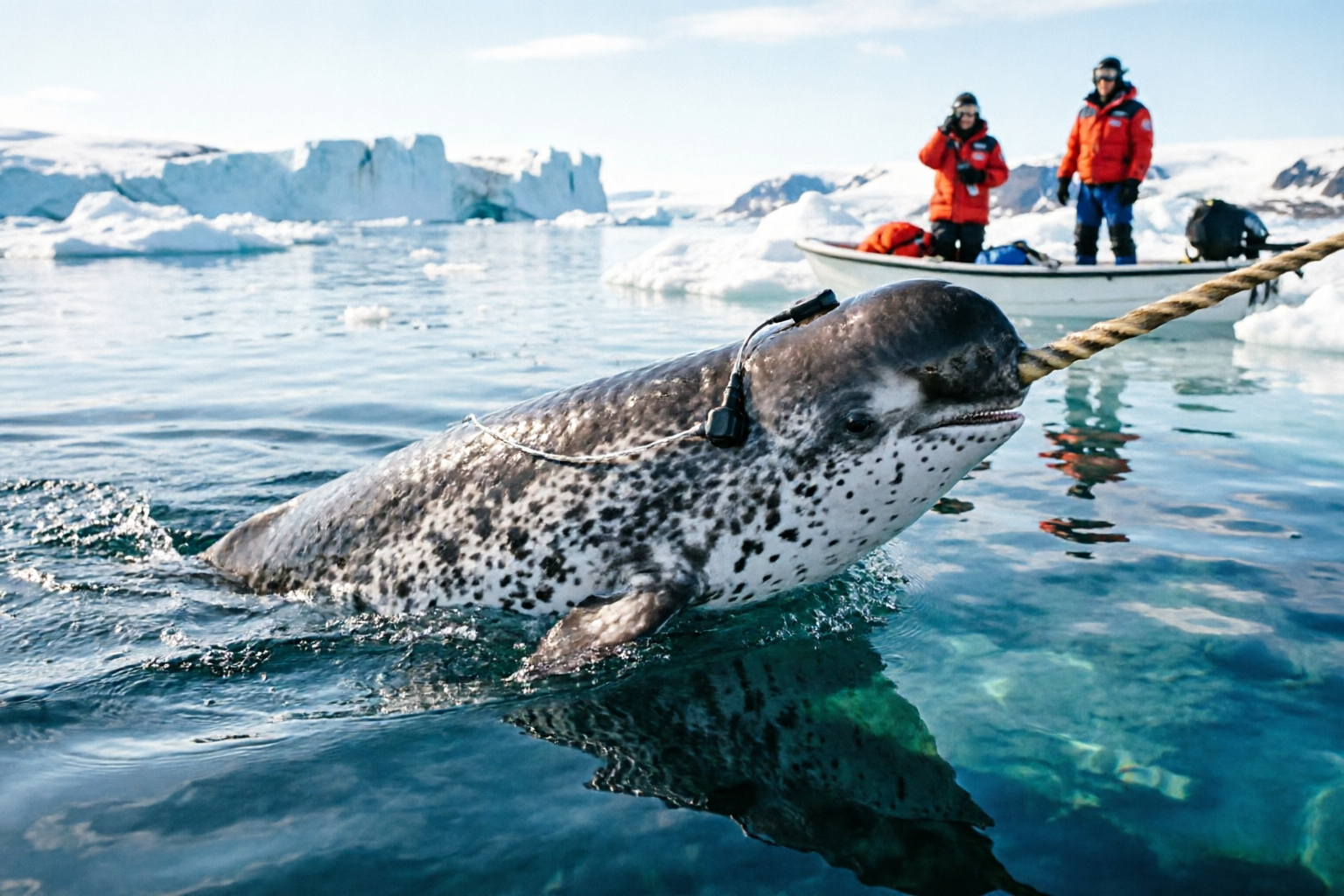
Scientists have turned to an unlikely ally in their quest to understand Arctic climate shifts: narwhals. By attaching oceanographic sensors to these marine mammals, researchers from the University of Copenhagen and collaborators gained access to previously unreachable parts of East Greenland’s fjords. The data collected from these deep, remote waters has exposed a significant intrusion of Atlantic water far inland, a phenomenon not previously documented in the region. This discovery provides critical insights into how ocean currents interact with glaciers, potentially accelerating ice melt in ways that could refine climate models. The study combined narwhal measurements with historical oceanographic records to build a more comprehensive picture of temperature and salinity patterns beneath the surface. Such findings highlight the importance of innovative methods in studying Earth’s changing polar environments, where traditional research tools often fall short. The results suggest that these hidden oceanic processes may play a larger role in glacier behavior than previously understood, offering new avenues for climate research.
Sources
1 sourceThe article is grounded in the independently assessed evidence listed here.
Generated from retrieved source material, checked for evidence and provenance, and released through runtime safety controls.
Read our editorial standard →Spot a problem?
Reports go to the operator review queue and do not alter the article automatically.