How AI explanations shape skin disease diagnosis differently for experts and novices
New research reveals that AI tools enhance diagnostic performance for less experienced users but may encourage overconfidence when explanations are provided prematurely, while clinicians fare best with raw predictions alone.
Written automatically from the sources below and not individually reviewed by a human editor.
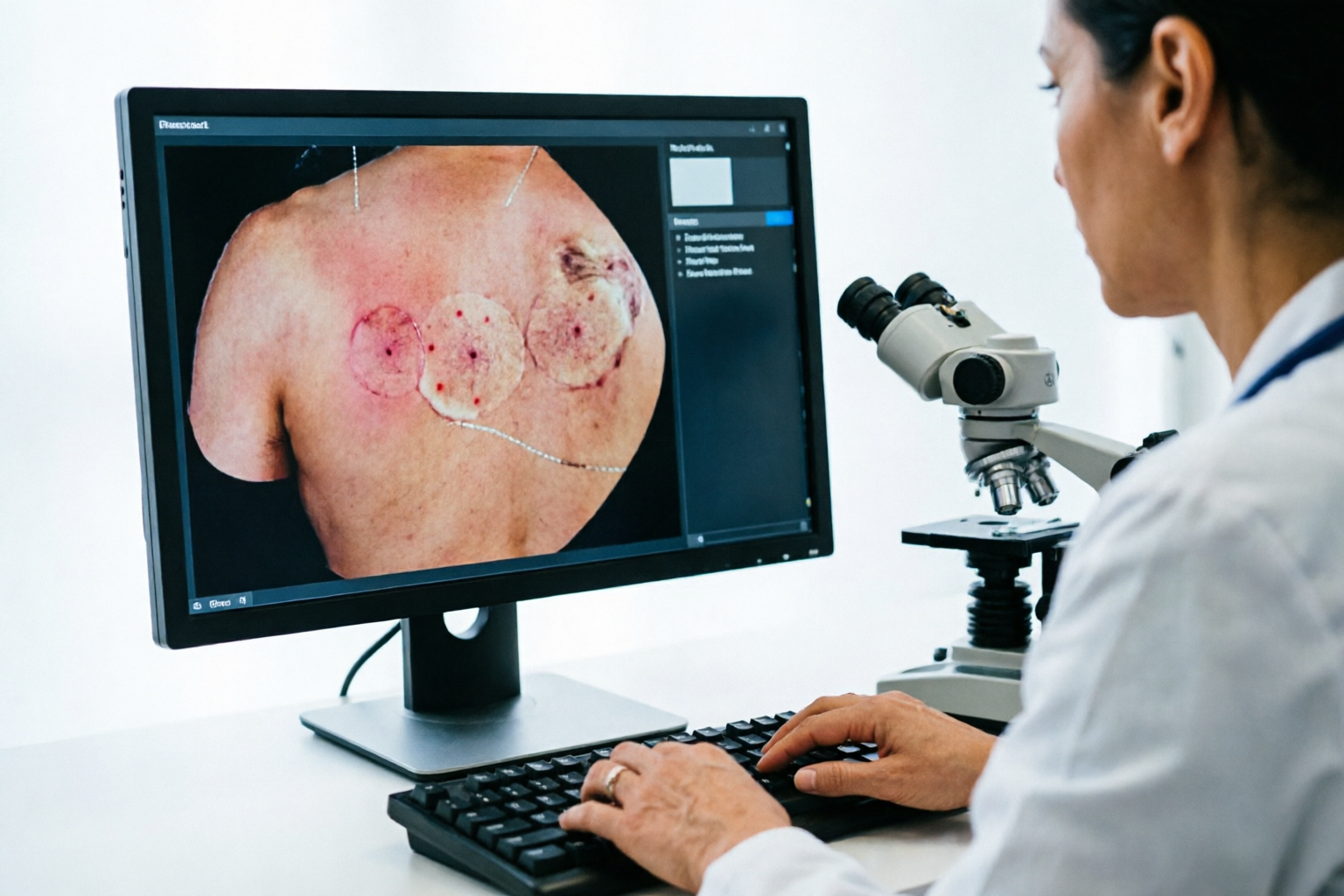
A collaborative study by researchers at MIT, Stanford, and Columbia has uncovered how the design of AI assistance influences skin disease diagnosis across varying levels of expertise. The findings suggest that while AI explanations can improve accuracy for non-specialists, they also carry risks of misplaced trust when those explanations are incorrect. Non-experts, in particular, were found to rely heavily on AI-generated reasoning, sometimes accepting flawed interpretations as correct. In contrast, clinicians demonstrated greater resilience to AI errors, performing most effectively when presented with predictions without additional explanatory details. The study also highlights that fairness-constrained AI models can mitigate disparities in diagnostic outcomes across different skin tones, though the broader challenge remains balancing transparency with user autonomy. These insights underscore the need for tailored AI interfaces that adapt to the user’s expertise level, ensuring that explanations are provided in ways that support rather than undermine clinical judgment. The research was supported by multiple institutions, including the National Science Foundation and Columbia University.
Sources
1 sourceThe article is grounded in the independently assessed evidence listed here.
Generated from retrieved source material, checked for evidence and provenance, and released through runtime safety controls.
Read our editorial standard →Spot a problem?
Reports go to the operator review queue and do not alter the article automatically.