Controlled fires reduce sequoia losses in California’s wildfire-prone forests
New research shows targeted burning in Sequoia National Park has sharply cut sequoia deaths from wildfires, offering a model for broader forest protection.
Written automatically from the sources below and not individually reviewed by a human editor.
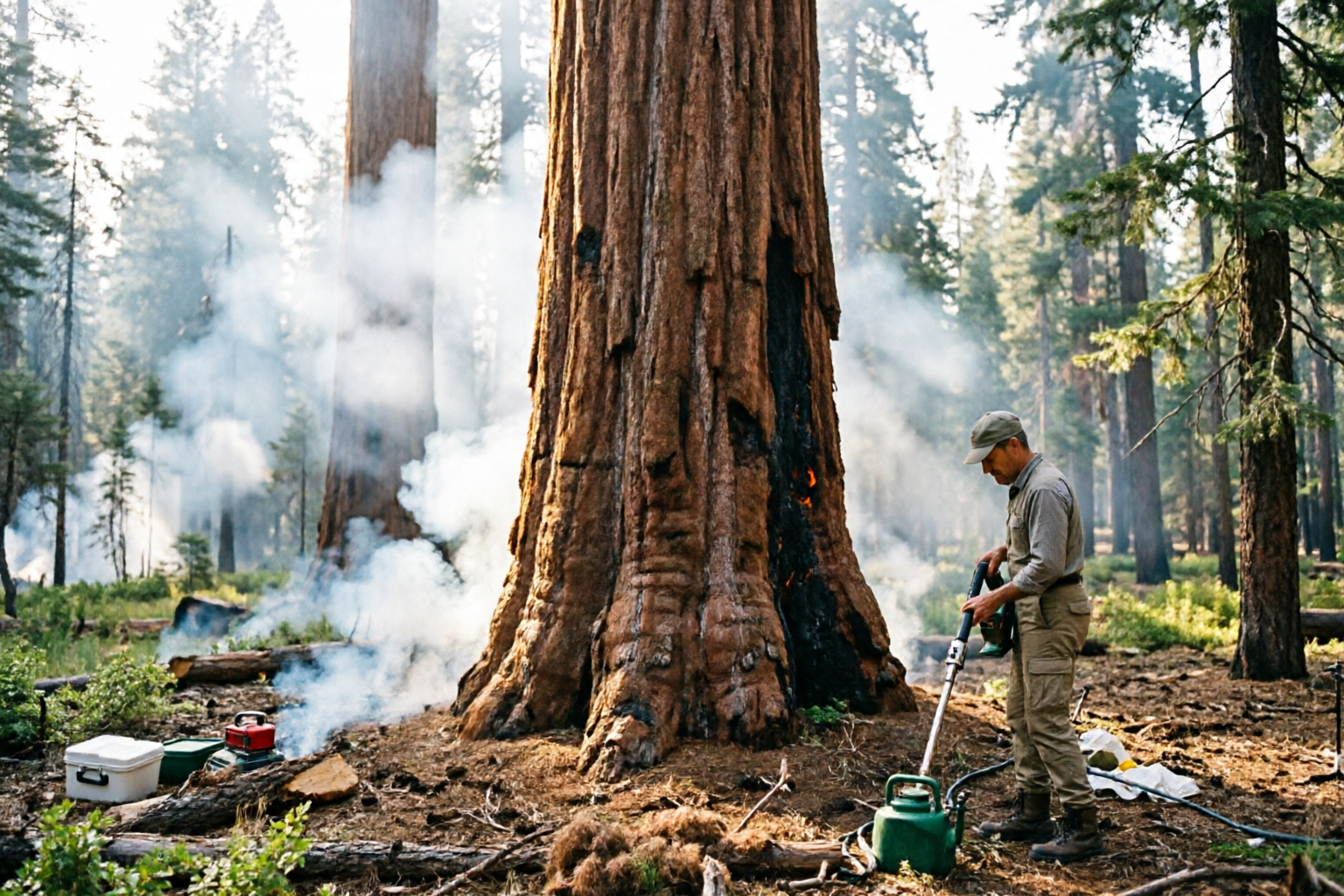
A recent study examining California’s Sierra Nevada forests reveals that controlled burns have significantly lowered the number of giant sequoias lost to wildfires. These ancient trees, among the largest and longest-lived on Earth, face growing threats from increasingly severe fires fueled by climate change. Researchers analyzed vast areas using aerial and satellite data to assess the impact of prescribed burns in Sequoia National Park and nearby regions. Their findings indicate that areas where controlled fires were conducted experienced far fewer sequoia fatalities compared to untreated zones. The approach demonstrates potential for wider application, suggesting that expanded use of controlled burns could further protect these iconic trees from future wildfire damage. Experts emphasize that this method not only preserves individual specimens but also helps maintain the ecological balance of these critical forest ecosystems. The study underscores the importance of proactive forest management in safeguarding these irreplaceable natural resources against the escalating risks posed by climate-driven fires.
Sources
1 sourceThe article is grounded in the independently assessed evidence listed here.
Generated from retrieved source material, checked for evidence and provenance, and released through runtime safety controls.
Read our editorial standard →Spot a problem?
Reports go to the operator review queue and do not alter the article automatically.