Schools across Canada cultivate learning through indoor gardens
Three Canadian schools have launched hydroponic gardens, integrating food production, technology, and sustainability into daily education while fostering community engagement.
Written automatically from the sources below and not individually reviewed by a human editor.
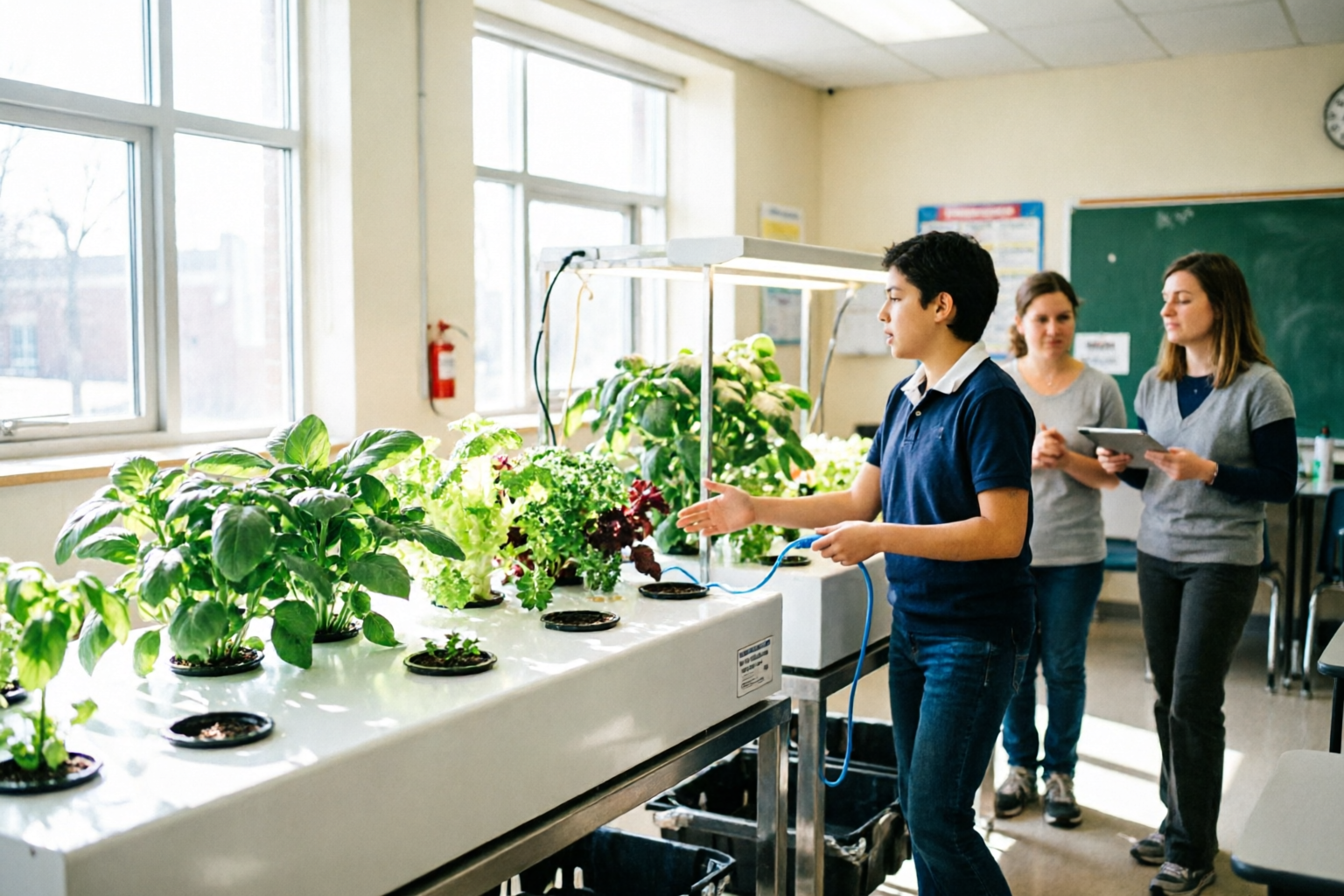
Students and educators in Alberta, Calgary, and Yukon are redefining environmental education through indoor hydroponic gardens. These systems allow schools to grow fresh vegetables year-round, directly serving cafeterias and reducing reliance on external food sources. Beyond food production, students collaborate with local universities and farms to design automated watering and nutrient delivery systems, merging hands-on learning with technical innovation. The initiative extends beyond classrooms, involving community members in sustainable practices and reinforcing lessons about resource management. By embedding gardening into the curriculum, schools demonstrate how small-scale solutions can address broader challenges, offering a model for accessible climate action in diverse settings. The success of these programs highlights the potential for educational institutions to lead in sustainability while nurturing student creativity and responsibility. This approach not only supports local food systems but also equips young learners with practical skills for a sustainable future. The integration of technology and agriculture reflects a growing trend where schools become hubs for both innovation and community resilience.
Sources
1 sourceThe article is grounded in the independently assessed evidence listed here.
Generated from retrieved source material, checked for evidence and provenance, and released through runtime safety controls.
Read our editorial standard →Spot a problem?
Reports go to the operator review queue and do not alter the article automatically.